Thursday, 20 April 2023


Aircraft  Faster  with Digitalisat 
#news: Aircraft faster digitalisation
more information:
The initial project for the digitalised development of control surfaces for future aircraft wings has now been successfully completed at the German Aerospace Center (Deutsches Zentrum für Luft- und Raumfahrt; DLR) Virtual Product House (VPH). At the Bremen Center for Eco-efficient Materials and Technologies (EcoMaT), DLR and partners from industry and research simulated a sequential digitalised chain of development phases for a wing flap on a computer for the first time – from design to production and testing. In doing so, DLR is laying the foundation for future virtual aircraft design processes through to certification – an important tool for accelerating the development of highly efficient aircraft.
"On the journey towards emission-free air transport, DLR acts as an architect and considers the entire system, with all its interrelationships, in order to get innovative technologies and digital methods to the industrial application stage in a timely manner, working together with our partners. As an integration centre for virtual product development, VPH plays a key role at DLR, and is the interface with industry and the regulatory authorities," explains Markus Fischer, DLR Divisional Board Member for Aeronautics.
Now that the VPH process has been successfully implemented in the initial project, wing and flap concepts can be designed more efficiently and in a more target-oriented way through advance simulations of production and testing. This means that possible complications and shortcomings in later development phases can be anticipated early on and avoided by altering the design. The simulation-based test procedures are also intended to replace some of the physical tests. In future, there will be less need for tests to be conducted using complex facilities. "Not only does this save a lot of time and money for testing and certification, but the 'end-to-end' digitalised chain also makes it possible to significantly reduce the overall development time for innovative aircraft components," says Kristof Risse, Head of VPH at DLR, describing the advantages.
VPH has been set up as an integration centre and research platform where experts from various DLR institutes and partners work together to integrate all of the key disciplines involved in aircraft development. Digital collaboration and co-development with the industrial VPH partners are made possible via a 'common source' approach in the form of a secure simulation environment, which was developed as part of the VPH initial project.

Saturday, 15 April 2023

 Aircraft  Machine


Despite a downturn in aviation, demand for skilled technical personnel will remain high as we move into recovery mode, particularly because there was such a huge shortage before the COVID-19 crisis. 

A major driver of this demand is an aging workforce. In Europe, Airbus has projected that aviation’s technical workforce will be badly affected by increasing retirements of baby boomers, and in the U.S., 30% of aviation mechanics are 60 years or older, according to the Aviation Technician Education Council (ATEC).

Industry officials tell Aviation Week privately that the coronavirus crisis has accelerated the wave of retirements. Eric Jones, department chair of Aviation Maintenance Sciences at Embry-Riddle Aeronautical University, sees a similar trend at airlines. And Shonu Bamrah, director of the British School of Aviation, notes that voluntary retirements by older workers are creating open positions, despite some companies imposing hiring freezes.

In the near-term, the pandemic will temporarily reduce the pool of qualified graduates needed for the future workforce. “There is actually going to be a little bit of a shortage right now because of the lower number of graduates this year due to COVID-19, and a lot of the schools in the ATEC group feel that they’re going to produce about 20% fewer graduates this year,” says James Hall, dean of Aviation Technologies at Wichita State University Campus of Applied Sciences and Technology (WSU Tech).

An audience poll during the Aviation Week Network’s “Aircraft Maintenance Training During COVID-19” webinar found that 43% of respondents expected the impact of the pandemic on training and graduation to delay eligible 2020 hires. The poll results also shed light on a potential industry concern: 28% of respondents believed new hires in the industry would look elsewhere for employment. 

There is certainly unease in aviation about potential workers accepting employment in other industries, particularly if aviation is perceived to be a less stable sector after the pandemic. “That airframe and powerplant [A&P] ticket is a valued commodity in other industries because [other companies] know what kind of training you received in school,” notes Jack O’Callaghan, American Airlines’ technical crew chief at Chicago O’Hare International Airport points out. “Disneyland hires A&P mechanics because [they’ve] got a background in pneumatics, hydraulics and electrics.”

However, Bamrah and Hall say interest in aviation technical training remains high—and has even increased at the British School of Aviation during the pandemic lockdown. Jones says the aviation industry’s diversification into areas such as commercial space, electric vertical-takeoff-and-landing vehicles and unmanned aerial systems is providing more interest for younger generations and more job opportunities, so he expects there to be robust hiring in the wake of COVID-19.

While restrictions on gatherings during the pandemic have also hindered some STEM initiatives, schools and organizations continue to place focus on creating interest in aviation technical careers with younger generations. The recently launched industry nonprofit Choose Aerospace is using pandemic-driven advances in online training as an opportunity to promote aerospace career opportunities. 

“One of the things we have been doing well is promoting technical education for the last couple of years as a very important career pathway,” Hall says. “I think you’re going to see that will continue even more so once the group restrictions are lifted.”

visit:   https://cad-conferences.sciencefather.com/

Tuesday, 11 April 2023

cnc lath machine in turning


A CNC (Computer Numerical Control) lathe machine is a computer-controlled machine tool that uses rotating tools to shape materials such as metal, plastic, or wood into the desired shape. CNC lathe machines can be used for a variety of machining operations, including turning, facing, drilling, threading, and boring.
The components of a CNC lathe machine include:
Bed: This is the foundation of the machine and provides a stable base for all the other components.
Headstock: This is the part of the machine that holds the workpiece and rotates it. It also contains the spindle, which holds the cutting tools.
Tailstock: This is the opposite end of the machine from the headstock and provides support for long workpieces.
Carriage: This is the part of the machine that moves the cutting tool across the workpiece.
Tool turret: This is a rotating mechanism that holds multiple cutting tools and allows for quick tool changes.
Control panel: This is where the operator inputs commands to the machine, such as the speed and direction of rotation, the cutting tool to be used, and the depth of cut.
CNC lathe machines can be programmed using a variety of software tools, including CAD/CAM (Computer-Aided Design/Computer-Aided Manufacturing) software. The operator inputs the design into the software, and the machine automatically executes the necessary cutting operations to produce the desired shape.
CNC lathe machines offer several advantages over traditional manual lathes, including higher precision, faster cycle times, and the ability to produce complex shapes. They are commonly used in industries such as aerospace, automotive, and medical device manufacturing.


visit: https://cad-conferences.sciencefather.com/

Wednesday, 5 April 2023

MANUFACTURING CAD &CAM 


 Computer-aided manufacturing is the use of software and computer-controlled machinery (CNC) to automate the manufacturing process. CAM itself stands for computer-aided manufacturing and usually works in tandem with CAD (computer-aided design) to allow machines to create objects directly from computer designs and software rather than engineers having to set up machines and processes manually.

How does CAM work?

Traditional manufacturing methods rely on engineers to set up the various machines used in the manufacturing process – often creating ‘jigs’ or patterns for machines to follow. The CAM system works by substituting hand-made jigs with software that defines the actions and processes of a machine directly.

Computer-aided manufacturing software translates drawings and data into detailed instructions that drive automated tools/machines. This allows designers to submit designs and specifications directly to machines without the need to develop jigs or program machines manually.

Typically, a designer will use CAD software on their computer to create a 3D design of a model or part. The software talks to CAM tools/machines to set up the processes to produce/tool the physical item automatically. CAM machines can then produce thousands of identical models automatically – reducing the time it takes to produce.

VISIT:https://cad-conferences.sciencefather.com/

What’s the difference between CAM and CAD?

There is often confusion about the difference between computer-aided design (CAD) and computer-aided manufacturing (CAM). The key is that one relates to design and one to manufacturing.

While the terms refer to different processes, they are closely related, making up different steps in the modern manufacturing process. Product designers use CAD software to create ‘blueprints’ for models. Importantly, these blueprints can be used to directly program CAM machines to produce the models – avoiding manual set up of machines.


What is CAM used for?

In today’s world, you’d be better off to ask what CAM can’t be used for. CAM is used – and can be used – to produce almost any item created by a machine or tool. It can be used to create models from metal, plastic and even wood.

Its main roles are:

  • Tool path designs create computer models of new designs
  • Machining equipment in manufacturing that rely on numerical controls for precision cutting, shaping and packaging
  • Management of overall production process to drive efficiency
  • Fabrication and engineering design which relies on the integration and synchronisation of various pieces of machinery with CAM software
  • Equipment safety. CAM is highly reliable – able to reproduce identical processes without deviation. This can also result in cost savings as manufacturing facilities can then maintain OSHA compliance.

Industries

As well as many of the consumer products we have in our homes, CAM is used in aerospace and defence, shipbuilding, the automobile and train industries and the machine tool industry.

Aerospace

CAM’s strength, safety, flexibility, versatility and precision means that it is invaluable to the aerospace industry as it can create complex workpieces including free-form surfaces and deep cavities in materials such as titanium and super-alloys.

Automotive

The automotive industry makes great use of CAM, its precision being essential for an industry where aesthetics can play as important a role as structure and strength. CAM can deliver circles, regular cubes and subtle curves on the surfaces as part of large assemblies with robust manufacturing capabilities and product data management (PDM) capabilities.

Many of our own automotive foam solutions enter a complex manufacturing process that involves a combination of traditional and computer-aided manufacturing steps.

Chemicals

In chemical and OTC pharmaceutical manufacturing companies, CAM is used in turnkey manufacturing to speed up the whole production process. For example, CAM will specify the volume of raw and secondary materials used in the chemical process.

Medical technology

This industry has made great use of CAD and CAM to deliver absolute precision where it’s needed in biomedical engineering: clinical medicine, customized medical implants, tissue engineering, dentistry, artificial joints and robotic surgery.

For example, 3D printing is used to create models of injuries and other health issues, CAM creates flexible endoscopic systems and dentists can now provide precision in chairside milling, orthodontics and implant workflows.

Examples of CAM

Textiles

Designers and manufacturers already use virtual 3D prototype systems to visualise 2D patterns into 3D virtual prototyping as in the case of software such as Modaris 3D fit or Marvellous Designer. Other software such as Accumark V-stitcher and Optitex 3D runway, present the viewer with a 3D simulation, which seeks to demonstrate to the viewer, the fit of the garment and the drape of the fabric.

Aerospace and astronomy

Telescope lenses need the highest degree of precision and CAM is delivering it for the 18 hexagonal beryllium segments in the James Webb Space Telescope. The primary mirror measures 1.3 metres from edge to edge and machining and etching will reduce the mirror mass by 92% from 250 kilograms to 21 kilograms.

Military

CAM has proven invaluable to The Royal Navy in the production of their dreadnought-class submarines. The task is unsurprisingly complex and requires the integration of more than 200 ship systems and CAM and CAD is detailed enough to pick up design issues, such as overlapping parts as well as allowing disparate teams to stay closely involved in the design process.

What are the advantages and disadvantages of CAM?

Despite all the clear advantages of CAM, it will not suit all manufacturing goals. For a start, the expertise and craft of human engineers still plays a critical role in high-quality manufacturing, as discussed in our full review of CAM’s benefits – Manufacturing: it’s not a battle of men or machine.

Here’s a summary of our conclusions:

Advantages of CAM

  • Predictable and consistent

  • Flexible and versatile, CAM systems can maximize utilization of a full range of production equipment (high-speed, 5-axis, multi-function and turning machines, electrical discharge machining (EDM) and CMM inspection equipment)

  • Ability to create prototypes quickly and without waste

  • Can aid in optimizing NC programs for optimum machining productivity

  • Can automate the creation of performance reports

  • Provides integration of various systems and processes as part of the manufacturing process

  • Higher productivity

  • Designs can be altered without the need to manually re-program machines especially with parametric CAD software

  • Ease of implementation as CAD and CAM systems become standardised

  • CAD and CAM software continues to evolve offering visual representation and integration of modelling and testing applications

  • Accuracy.

Disadvantages of CAM

  • Computer errors are possible

  • CAD and CAM software can be expensive

  • Training is expensive

  • Computers and controllers to run the software and CNC machinery for manufacturing is expensive.

Popular CAD/CAM tools

There are many computer-aided design software brands and products. Below is a list of popular computer-aided manufacturing tools including CNC (Computer numerical control) machines:

  • Autodesk AutoCAD

  • Lathes

  • CNC routers

  • Water cutters

  • Plasma cutters

  • Laser cutters

  • Milling machines

  • Electrical Discharge Machines (EDM)

Sunday, 2 April 2023

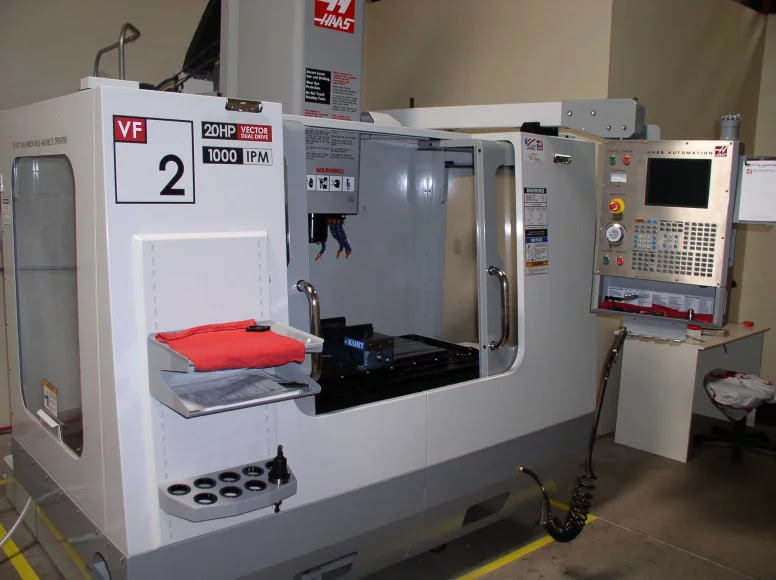
CNC MILLING MECHINE 


CAD,by itself,means computer-aided design. Computer-aided design is a concept which encompasses any use of the computer to enhance or aid in the design process. Computers have several features that make them valuable aids to designers. These include calculation, analysis, review, modeling and testing capabilities.

Architects use CAD to develop 3D drawings of their designs—CAD can be highly specific and different versions exist for different applications—but its main function is the creation of 2D vector-based models and 3D solid and surface models. Manufacturers use CAD’s capabilities to view specific part and component designs before production, so they can check for flaws and re-design if necessary.

CAM ,by itself,means computer-aided manufacturing.Computer-aided manufacturing is a concept which encompasses any use of the computer to enhance or aid in any manufacturing process. The two best-known uses of the computer to aid in manufacturing are CNC(computer numerical control) and Robotics. Almost any type of machine used in manufacturing — lathes, mills, drills, saws, punches. shears, and so on — can be computer controlled.Industrial robots are also computer controlled.

VISIT : https://cad-conferences.sciencefather.com//

CAM creates physical models—this is helpful when manufacturers need to check a part or component against other parts for proper fit.

Illustrated by Groover(1980),using the terms CAD and CAM together (CAD/CAM) is an attempt to show the close relationship of these concepts in a manufacturing setting. It also symbolizes a goal of the automation phase of development. That goal is the elimination of the wall between design and manufacturing that was put up by specialization during the mechanization phase.

In order to generate the actual model, CAM works alongside CAD—using CAD designs, CAM uses numerical coding to run the machine that creates the product. THOMASNET (2014) demonstrated that a CAD/CAM package allows companies to develop and save their own product designs, and program machines to create the actual component.

Today, affordable CAD and CAM software is completely main-stream among dependent industries.Software is readily available from a variety of companies and free demos and downloads are not hard to find.

#mechanicalengineering #innovation #automotive #engine #engineer #electronics #industry #machine #cnc #mechanic #automobile #manufacturing #civilengineering #metalwork #robotics #electrical #engineers #mechanical #mechanicalengineering #automation #autocad

  A bold and inspiring visual created for researchers who dare to explore new ideas and make a lasting impact.  DARE TO DISCOVER. DESERVE TO...