Thursday, 19 September 2024


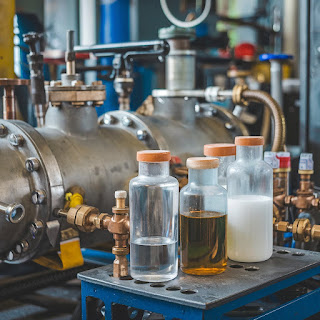
In mechanical engineering, cylinders are fundamental components used in a wide range of machines and systems. A cylinder is a device that converts energy from a fluid (either liquid or gas) into mechanical motion. They are typically classified as hydraulic cylinders or pneumatic cylinders based on the type of fluid used. Cylinders can generate linear motion, which is essential for various applications such as lifting, pushing, pulling, and pressing. Their ability to produce consistent and precise linear movement makes them indispensable in industries like manufacturing, construction, automotive, and robotics.

Hydraulic Cylinders

Hydraulic cylinders use pressurized hydraulic fluid, typically oil, to generate force and motion. They are known for their high power density, making them ideal for heavy-duty applications. The basic structure consists of a cylinder barrel, piston, piston rod, and seals. As hydraulic fluid enters the barrel through ports, it pushes the piston, causing the rod to extend or retract. Hydraulic cylinders are commonly found in construction equipment such as excavators, loaders, and cranes, where large forces are needed to move heavy loads.

Pneumatic Cylinders

On the other hand, pneumatic cylinders use compressed air to produce motion. While they operate similarly to hydraulic cylinders, they are lighter and typically used in lower force applications. Pneumatic cylinders are favored for automation systems in industries such as packaging, material handling, and assembly lines due to their quick response times and simplicity in design. However, they cannot generate the same amount of force as hydraulic cylinders, making them less suitable for applications requiring high pressure.

Types and Applications

Cylinders come in various types, including single-acting, double-acting, telescopic, and rodless designs, each tailored for specific operational needs. For instance, single-acting cylinders exert force in one direction only, while double-acting cylinders provide push-pull functionality, extending and retracting through fluid control on both sides of the piston.

In modern mechanical systems, the integration of sensors and automation controls has enhanced cylinder performance, allowing for precise movement control, feedback mechanisms, and even energy efficiency improvements. As industries evolve toward greater automation and precision, the role of cylinders remains central to mechanical engineering innovations. Their adaptability and efficiency continue to push the boundaries of what is possible in machinery and industrial applications.


In mechanical engineering, rims play a crucial role in the design and performance of various vehicles and machinery. They serve as the structural foundation for tires, impacting the overall stability, handling, and efficiency of vehicles. The rims, often made of materials like steel, aluminum alloys, or carbon fiber, need to be carefully engineered to withstand immense loads, high-speed rotation, and adverse environmental conditions.

Steel rims are known for their durability and strength, making them suitable for heavy-duty applications like trucks and industrial machinery. However, their weight can negatively affect fuel efficiency and handling. Aluminum alloy rims are lighter, providing better fuel economy and improved handling characteristics. They also enhance the aesthetic appeal of vehicles, which is a significant factor in consumer markets. Meanwhile, high-performance applications, such as racing or sports vehicles, often use rims made of carbon fiber due to their extremely low weight and high strength-to-weight ratio.

Mechanical engineers must consider factors such as load-bearing capacity, thermal expansion, and manufacturing feasibility when designing rims. The design process involves simulations and testing to ensure the rims can endure various stresses, such as impact loads and high temperatures from braking. Advances in finite element analysis (FEA) and computer-aided design (CAD) have revolutionized rim design, allowing engineers to optimize shapes for both strength and aerodynamics.

In addition, rims must be designed to accommodate different tire sizes and types, which adds another layer of complexity to the engineering process. Proper rim-tire compatibility is essential for maintaining safety and performance, especially under varying driving conditions. Thus, rims are not just functional components but a critical aspect of mechanical design that impacts a vehicle’s efficiency, safety, and overall performance.


Friday, 13 September 2024


Motor design is a critical area of mechanical engineering, influencing various industries from automotive to robotics and industrial machinery. At its core, motor design involves creating machines that convert electrical energy into mechanical energy, facilitating movement or mechanical work. This process is crucial for a broad range of applications, such as powering electric vehicles, industrial automation, household appliances, and even aerospace systems. Mechanical engineers specializing in motor design must account for several complex factors, including performance efficiency, thermal management, materials selection, and operational longevity.

One of the primary considerations in motor design is efficiency. Engineers strive to minimize energy losses caused by friction, heat, or electromagnetic inefficiencies, as these losses reduce the overall performance of the motor. To achieve higher efficiencies, engineers often optimize the motor's geometry, magnetic field distribution, and winding configurations. Computational tools, such as finite element analysis (FEA), are used extensively to model and predict motor behavior under various operating conditions, enabling more precise designs that meet specific energy consumption and performance targets.

Thermal management is another crucial aspect of motor design. As motors operate, they generate significant heat, which, if not properly managed, can lead to material degradation and failure. Mechanical engineers must design motors with adequate cooling systems, such as air or liquid cooling, to dissipate heat efficiently. They also select materials with high thermal conductivity and heat resistance to ensure durability under continuous operation. Balancing these factors is essential for achieving both optimal performance and extended motor life.

Material selection plays a pivotal role in motor design. Engineers must choose materials for the motor's core, windings, and casing that can withstand operational stresses while maintaining structural integrity. Common materials include steel or iron for the core and copper for windings due to its excellent conductivity. Additionally, the weight of the motor must be minimized, particularly in applications like aerospace or electric vehicles, where fuel efficiency and space are critical factors.

Lastly, the growing demand for sustainable energy solutions has driven innovation in motor design. Engineers are now focusing on developing motors that use less energy and materials while delivering high performance. This shift has led to the development of brushless motors, permanent magnet motors, and other advanced technologies aimed at reducing carbon emissions and energy consumption.

In summary, motor design in mechanical engineering is a multifaceted discipline that requires balancing performance, efficiency, thermal management, and sustainability.


Social media link :


visit our website : cad.sciencefather.com 

contact mail : cadquery@sciencefather.com 

Thursday, 12 September 2024


A nozzle is a mechanical device designed to control the direction or characteristics of a fluid flow as it exits or enters an enclosed chamber or pipe. In mechanical engineering, nozzles play a crucial role in various applications, including propulsion, spray systems, cooling mechanisms, and gas turbines. Their primary function is to regulate the pressure, velocity, and flow rate of fluids such as air, water, or gas.

Nozzles are designed to convert the pressure energy of a fluid into kinetic energy. This is achieved by altering the cross-sectional area of the nozzle, which causes the fluid to accelerate as it passes through. There are several types of nozzles used in engineering, including converging, diverging, and converging-diverging nozzles. The design choice depends on the required output—whether it involves increasing velocity, reducing pressure, or achieving a specific spray pattern.

For instance, in jet engines, converging-diverging nozzles are commonly used to accelerate exhaust gases to supersonic speeds, improving thrust and propulsion efficiency. In contrast, spray nozzles in cooling systems or agricultural applications are designed to disperse liquids over a wide area, optimizing the spray pattern for effective coverage.

Nozzle design requires careful consideration of material properties, fluid dynamics, and thermodynamics. Engineers must account for factors like temperature, pressure, and flow rate to ensure efficient operation. Improper nozzle design can lead to inefficiencies such as fluid losses, pressure drops, or uneven distribution, potentially damaging equipment or reducing performance.

In conclusion, nozzles are essential components in a wide range of mechanical systems, enabling precise control over fluid behavior. Their design and application are fundamental in achieving desired mechanical outcomes, making them indispensable in mechanical engineering.


Social media link :


visit our website : cad.sciencefather.com 

contact mail : cadquery@sciencefather.com 


Monday, 9 September 2024


Gears play a critical role in mechanical engineering, serving as essential components in various machines and mechanisms to transmit power and motion. These rotating elements, featuring teeth that interlock, are used to alter the speed, torque, and direction of mechanical movement. The efficiency and precision with which they operate make them indispensable in a wide range of applications, from simple devices like clocks to more complex machinery in automobiles, aircraft, and industrial equipment.

There are several types of gears used in mechanical engineering, each designed for specific functions. Spur gears, the most common type, have straight teeth and are used for parallel shafts. These gears are simple in design and easy to manufacture, making them cost-effective for many applications. However, spur gears can be noisy at high speeds due to the impact of the teeth engaging.

Helical gears offer a solution to this issue with their angled teeth, which engage more gradually, resulting in smoother and quieter operation. They are often used in automotive transmissions and other high-speed applications. While helical gears are more efficient in transmitting power, they do introduce a side load on the shaft, which must be compensated for with bearings or other support mechanisms.

Bevel gears are used when the input and output shafts are at an angle, typically 90 degrees. They are found in various applications such as differential drives in cars, where power needs to be transferred between intersecting axes. Worm gears are another specialized type, designed for high torque reduction and the ability to stop or hold a load, often used in conveyor systems or lifts.

The material selection for gears is critical, depending on the application’s load, speed, and environmental conditions. Common materials include steel for heavy-duty gears and plastic or brass for lighter, low-noise applications.

In modern mechanical engineering, gears are designed using sophisticated computer-aided design (CAD) software that allows for precise modeling and simulation, ensuring that gears will perform effectively under specific loads and operating conditions. This ability to optimize design leads to improved efficiency, reduced wear, and extended lifespan of gear systems, making them fundamental components in the advancement of engineering technology.


Social media link :


visit our website : cad.sciencefather.com 

contact mail : cadquery@sciencefather.com 

Sunday, 8 September 2024


Computer-Aided Design (CAD) software has revolutionized the way engineers, architects, and designers conceptualize and develop their projects, streamlining the design process with precision and efficiency. CAD software provides powerful tools for creating detailed 2D drawings and 3D models, allowing professionals to visualize, analyze, and refine their designs before physical production begins. This software is integral in industries such as automotive, aerospace, architecture, and manufacturing, where complex designs and technical specifications are required. CAD applications offer a wide range of features, including geometric modeling, parametric design, and finite element analysis, which enhance the accuracy and functionality of the design process.

One of the key advantages of CAD software is its ability to produce detailed and accurate designs with high precision. Traditional manual drafting methods are often time-consuming and prone to errors, but CAD software automates many aspects of the design process, reducing the likelihood of mistakes and ensuring that designs meet exact specifications. Additionally, CAD tools enable easy modification and iteration of designs, allowing users to quickly adjust dimensions, materials, and other parameters without starting from scratch. This flexibility is crucial in iterative design processes where rapid prototyping and revisions are common.

Modern CAD software also supports collaboration and integration with other digital tools. Through cloud-based platforms and file-sharing capabilities, teams can work together on a single design project, regardless of their physical location. This collaboration is facilitated by features such as version control, markup tools, and real-time updates, which ensure that all team members are working with the most current information. Furthermore, CAD software can integrate with other software systems, such as Computer-Aided Manufacturing (CAM) and Building Information Modeling (BIM), to provide a comprehensive approach to design and production.

In addition to its practical benefits, CAD software contributes to innovation by allowing designers to experiment with new concepts and materials. Advanced simulation and analysis tools enable users to test their designs under various conditions, predicting performance and identifying potential issues before physical prototypes are created. This capability not only accelerates the development process but also enhances the overall quality and sustainability of the final product.

Overall, CAD software is a vital tool in modern design and engineering, offering enhanced precision, efficiency, and collaboration. Its ability to streamline the design process, integrate with other technologies, and support innovation makes it indispensable for professionals across various industries.


Social media link :


visit our website : cad.sciencefather.com 

contact mail : cadquery@sciencefather.com 


Thursday, 5 September 2024


Mechanical devices play a pivotal role in modern industry and everyday life, offering solutions that range from simple mechanisms to highly complex systems. These devices, fundamentally designed to convert energy into motion or perform specific tasks, have revolutionized how we approach manufacturing, transportation, healthcare, and various other sectors.

At the heart of mechanical devices is the interplay of forces, motion, and energy. This can be as basic as a lever, which amplifies force, or as advanced as an internal combustion engine that powers vehicles. Mechanical devices often consist of multiple components such as gears, pulleys, springs, bearings, and shafts, which work in unison to achieve the desired motion or function. Each component has its own role, contributing to the overall performance of the system.

One prime example is the internal combustion engine, which is integral to automotive engineering. It converts chemical energy from fuel into mechanical energy, powering cars, motorcycles, and other vehicles. Through a series of controlled explosions in the engine’s cylinders, the expanding gases push pistons, generating the rotational motion that drives the vehicle. This mechanical device, though common, exemplifies the intricate relationship between energy conversion and motion.

Another example of mechanical devices is in robotics. Actuators, which are often hydraulic or pneumatic, convert energy into mechanical movement to perform tasks like lifting, gripping, or transporting objects. These devices are crucial in automated manufacturing, where precision and efficiency are paramount. Robotics, powered by mechanical devices, continues to push the boundaries of what machines can achieve.

Mechanical devices are also essential in household appliances, such as washing machines, blenders, and fans. In these everyday items, electric motors—a type of mechanical device—convert electrical energy into mechanical rotation. The mechanical components within these devices ensure that the energy is used effectively to complete tasks that would otherwise require manual labor.

In conclusion, mechanical devices are the backbone of modern innovation, driving advancements in technology and improving efficiency across a range of industries. Whether simple or complex, these devices continue to shape the world by making processes faster, more precise, and increasingly automated. Their role in the future will only grow as we develop smarter, more efficient technologies.


visit our website : cad.sciencefather.com 

contact mail : cadquery@sciencefather.com 

 Congratulations to Prof. Neshka Manchorova of Medical University Plovdiv, Bulgaria , on being recognized as a nominee for the Innovative R...