Wednesday, 20 September 2023

Leveraging computational fluid dynamics in heat sink designs

In the realm of electronics design, heat sinks are essential devices that help to dissipate heat produced by electronic or mechanical devices. These thermal management devices play a pivotal role in the performance and longevity of electronic devices by preventing overheating.

Designing an effective heat sink, however, presents its own set of challenges. There are several variables at play, such as the shape and material of the heat sink and the airflow conditions, among other things. Finding the optimal combination of these variables to improve the heat sink’s performance is easier said than done. For instance, creating and testing new heat sink prototypes can be time-consuming and resource intensive.


Computational fluid dynamics (CFD) tools have become especially relevant in designing heat sinks, primarily because of their ability to model complex fluid and heat transfer scenarios, which are integral to effective heat sink design.

CFD: A quick primer

CFD is a branch of fluid mechanics that uses numerical methods and algorithms to solve, analyze and simulate engineering problems involving fluid flow and heat transfer. CFD tools rely on a set of fundamental differential equations called the Navier-Stokes equations, which are based on the principles of conservation of momentum and conservation of mass. These equations are combined with the conservation of energy equations to provide a complete mathematical model and description of fluid flow.

1. Conservation of mass (or the continuity equation)
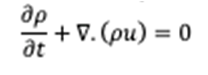
2. The conservation of momentum

3. Conservation of energy

Where  is the fluid density, u is the velocity vector,  is the pressure,  is the dynamic viscosity, g is the acceleration due to gravity, cp is the specific heat at constant pressure, T is the temperature, k is the thermal conductivity and S is the volumetric heat source.

Learn more: Introduction to computational fluid dynamics

CFD in heat sink design

By applying CFD to heat sink design, engineers can gain valuable insights into air velocity, temperature distributions, pressure drops and heat transfer coefficients. In addition, CFD provides valuable information about thermal resistance and pressure drop, all of which are valuable for optimizing heat sink performance.

Visit:

International Conference on Computer Aided Design in Mechanical Engineering

 Nomination Linkhttps://x-i.me/cad02ja

 #DefenseCAD #MilitaryDesign #CADforSecurity #WarfareTechCAD


Monday, 11 September 2023

Prospects in mechanical engineering


What Others Are Reading See More Nature journalling, a powerful learning tool Gati Shakti University, Airbus ink pact to train students for aviation sector With guidelines for students with special needs, UGC eyes more inclusivity in higher educat...

Here are a few fields where mechanical engineering continues to be relevant. Biomedical and Pharmaceutical industry: Most of the cutting-edge technology used in the pharmaceutical industry are developed with the involvement of mechanical engineers, ...

Biomedical and Pharmaceutical industry: Most of the cutting-edge technology used in the pharmaceutical industry are developed with the involvement of mechanical engineers, especially those with knowledge in design and manufacturing.

Even a company manufacturing something basic, like disposable syringes, needs a machine that moulds medical grade plastic into a syringe. The regular maintenance of these machines also requires the skill set of mechanical engineer.

The regular maintenance of these machines also requires the skill set of mechanical engineer.

Food industry: The food processing industry has seen a heavy shift towards automation, which has taken place on the back of machines. This starts from the manufacture of food processing machines used, and involves other subjects like Automation, Rob...


Visit:

International Conference on Computer Aided Design in Mechanical Engineering

Nomination Link: https://x-i.me/cad02ja

#DefenseCAD #MilitaryDesign #CADforSecurity #WarfareTechCAD

Social media Link:

YouTube: youtube.com/channel/UCGpONJQzsHCByPoa1ZeCPnA

Instagram: instagram.com/sophiaisabella270/

Twitter: twitter.com/sophiai14453133

LinkedIn: linkedin.com/in/sophia-isbella-1b63b6260/

Blogger: mechanicscience.blogspot.com/

Thursday, 17 August 2023

CAD for rapid prototyping and 3D printing 

#news: CAD for rapid prototyping and 3D printing
more information:
Computer-Aided Design (CAD) plays a crucial role in rapid prototyping and 3D printing processes. CAD software allows designers and engineers to create detailed virtual models of objects, which can then be transformed into physical prototypes using 3D printing technologies. Here's how CAD is used in the context of rapid prototyping and 3D printing:
Design Creation: CAD software enables designers to create intricate 3D models of their ideas. They can use various tools to sketch, extrude, revolve, loft, and manipulate geometric shapes to form the desired object. Modern CAD tools offer parametric design capabilities, allowing users to easily modify and update designs by changing parameters.
Accuracy and Precision: CAD software allows for high precision and accuracy in design, ensuring that the virtual model matches the intended physical prototype. This is crucial for successful 3D printing, as any discrepancies between the virtual and physical models could result in defects.
Iterative Design: Rapid prototyping involves creating multiple iterations of a design to refine and optimize it. CAD software makes this process efficient by allowing designers to quickly make changes, test variations, and experiment with different design ideas before committing to a physical prototype.
Complex Geometry: 3D printing can produce objects with intricate geometries that would be challenging or impossible to create using traditional manufacturing methods. CAD tools provide the means to design these complex geometries, including organic shapes, intricate lattices, and internal structures.
File Compatibility: CAD software generates 3D models in various file formats, such as STL (Stereolithography) and OBJ (Object), which are compatible with 3D printing software and machines. These files define the geometry and structure of the object to be printed.
Support Structures: Some 3D printing processes require the use of support structures to prevent sagging or collapse during printing. CAD software enables designers to add these structures to their models to ensure successful printing.
Material Considerations: Different 3D printing materials have varying properties and requirements. CAD software allows designers to account for material properties such as shrinkage, strength, and thermal characteristics, ensuring that the final printed object meets the desired specifications.
Integration with 3D Printing Software: Many CAD software tools can directly interface with slicing software, which translates the 3D model into a set of instructions that the 3D printer can understand. This streamlines the process and reduces the chances of errors during printing.
Scale and Measurement: CAD software provides precise measurements and dimensions for the designed object. This is crucial for maintaining accuracy when transitioning from the digital design to the physical prototype.
In summary, CAD software is an essential tool for rapid prototyping and 3D printing. It enables designers and engineers to create, modify, and optimize designs, ensuring a smooth transition from the virtual world to the physical world through the process of 3D printing.

Wednesday, 9 August 2023


CAD for defense and military applications


#news: CAD for defense and military applications

more information:
Computer-Aided Design (CAD) plays a significant role in the defense and military industries, enabling the design, development, analysis, and testing of various systems and equipment. Here are some ways CAD is utilized in defense and military applications:
Weapon Systems Design: CAD software is used to design and model various weapon systems, including firearms, missiles, and artillery. It helps engineers create detailed 3D models, simulate firing trajectories, and optimize performance.
Aircraft and Vehicle Design: CAD tools are crucial for designing military aircraft, drones, armored vehicles, and naval vessels. These applications require intricate designs, aerodynamic analysis, and structural integrity evaluations.
Communication Systems: CAD assists in designing communication equipment, such as satellite systems, radio transmitters, and encryption devices. It ensures that the equipment is efficient and secure.
Protective Gear and Apparel: Military personnel require specialized protective gear and uniforms. CAD aids in designing ergonomic and functional clothing and equipment, considering factors like mobility, comfort, and protection.
Infrastructure Planning: CAD is used in planning and designing military bases, training facilities, and command centers. It helps optimize space utilization, security arrangements, and communication layouts.
Simulations and Training: CAD models are often used in simulations for military training exercises. Soldiers can practice tactics and maneuvers in a virtual environment before implementing them in the field.
Drone and Unmanned Systems: CAD software helps design and simulate drones and other unmanned systems used for reconnaissance, surveillance, and even combat. These designs need to be aerodynamic and functional.
Electronic Warfare Systems: CAD assists in developing electronic warfare systems, which involve complex electronics and antennas. Designing these systems using CAD ensures optimal performance and integration.
Explosive Ordnance Disposal (EOD): CAD tools aid in designing specialized equipment used by EOD teams to safely handle and defuse explosive devices.
Naval Architecture: For naval vessels, submarines, and underwater vehicles, CAD is crucial for hydrodynamic analysis, structural design, and integration of various systems.
Cryptography and Security: In the development of secure communication systems and encryption methods, CAD is used to design and analyze cryptographic algorithms and protocols.
Cybersecurity Infrastructure: CAD can also be used to design and plan secure computer networks and cybersecurity infrastructure to safeguard military information and operations.
Satellite and Space Systems: CAD is employed in the design of military satellites and space systems for communication, reconnaissance, and intelligence gathering.
Ballistic Analysis: In forensic and criminal investigations involving firearms, CAD can assist in creating models for ballistic analysis and trajectory reconstruction.
Overall, CAD significantly enhances the efficiency, accuracy, and effectiveness of the design and development processes in defense and military applications, contributing to advancements in technology and national security.

Monday, 7 August 2023

 CAD for disaster management and emergency response

#news: CAD for disaster management and emergency response planning
more information:
Computer-Aided Design (CAD) can play a crucial role in disaster management and emergency response planning by providing tools to create detailed visual representations of physical spaces, infrastructure, and resources. Here's how CAD can be used in this context:
Mapping and Visualization: CAD software can be used to create accurate and detailed maps of the affected areas, including buildings, roads, utilities, and topography. This information is essential for understanding the terrain and infrastructure, helping emergency responders plan their actions effectively.
Resource Management: CAD can be used to create digital models of available resources, such as emergency vehicles, medical supplies, shelters, and equipment. These models can help emergency planners allocate resources optimally based on the severity and location of the disaster.
Evacuation Planning: CAD can simulate evacuation scenarios, taking into account factors like traffic flow, building layouts, and population density. This enables emergency planners to identify potential bottlenecks and develop efficient evacuation strategies.
Infrastructure Analysis: CAD software can assess the structural integrity of buildings and infrastructure after a disaster. This information helps determine whether it's safe for emergency personnel to enter certain areas and can guide decisions on building demolitions or reinforcements.
Communication Planning: CAD models can be used to visualize communication networks and identify potential disruptions. This is crucial for ensuring that communication remains operational during emergencies.
Search and Rescue: CAD can assist in simulating search and rescue operations by providing accurate models of affected areas. These simulations help responders plan their routes and tactics for finding and rescuing survivors.
Coordination and Collaboration: CAD models can be shared among different agencies involved in disaster response, facilitating better coordination and collaboration. This ensures that all parties have access to the same up-to-date information.
Training and Simulation: CAD models can be used for training emergency responders and volunteers. Simulating various disaster scenarios in a controlled environment helps responders understand the challenges they might face and how to address them effectively.
Damage Assessment: CAD models can document and visualize the extent of damage caused by a disaster. This information is valuable for assessing the scope of the response effort and for reporting to higher authorities and the public.
Preventive Planning: CAD software can aid in developing disaster-resistant infrastructure and urban planning. By simulating potential disaster scenarios, planners can identify vulnerabilities and design structures that can better withstand various hazards.
Public Awareness and Education: CAD-generated visualizations can help educate the public about disaster risks and response procedures. Clear visuals can make it easier for people to understand evacuation routes, assembly points, and emergency contact information.
Overall, CAD technology can significantly enhance disaster management and emergency response planning by providing accurate, visual, and data-driven tools to effectively prepare for and respond to disasters of various scales.


Congratulations to Assoc. Prof. Dr. Wang Tao on being recognized with the Best Researcher Award for his outstanding contributions to Pneumat...